
TrueInsight
Siemens/Altair Channel Partner
Menu



Engineering Calculators for Electrical & Simulation Workflows


Available Engineering Calculators
Engineers rely on fast, accurate calculations to validate designs, optimize performance, and reduce errors. These calculators support common electrical and system-level tasks, from power factor analysis to motor sizing and unit conversion.
Transmission Line Calculator
Power Factor Calculator
Motor Sizing Calculator
Unit Conversion Tool
Why These Calculations Matter in Engineering Workflows
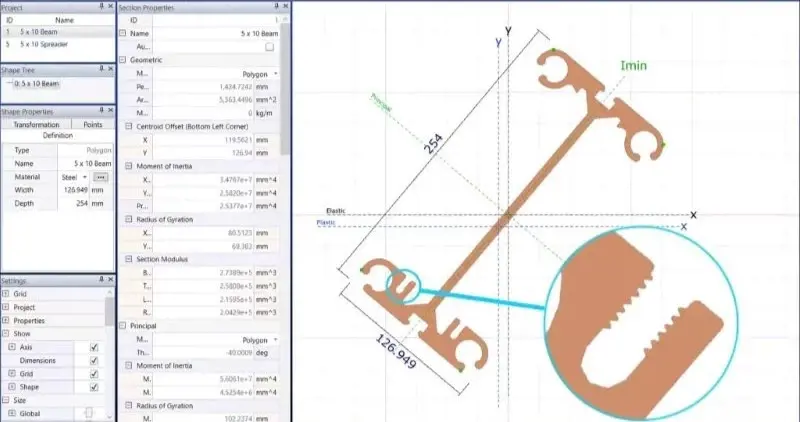
Accurate engineering calculations are the foundation of simulation-driven design. Whether validating electrical behavior, sizing components, or preparing models, these calculations directly impact simulation accuracy and product performance.
In advanced workflows, these same calculations are integrated into tools like Altair simulation environments, where they scale from quick checks to full system modeling and optimization.
From Calculations to Simulation-Driven Design
While these calculators support quick evaluations, complex systems require deeper analysis. Simulation tools enable engineers to model real-world behavior, test scenarios, and optimize designs beyond manual calculations.
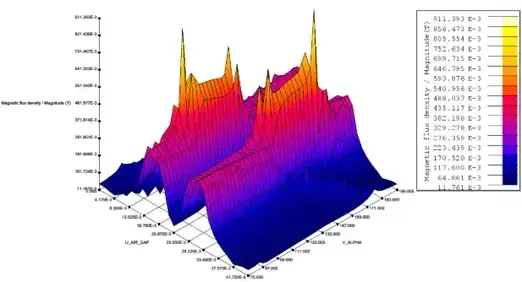
Altair Flux
Supports detailed electromagnetic analysis of motors, transformers, and electrical components, extending basic motor sizing and power calculations into full physics-based validation.
Explore Flux →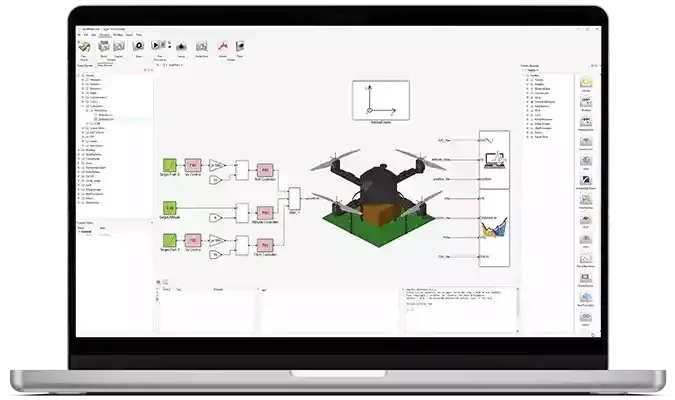
Altair Twin Activate
Connects engineering models into real-time digital twins, expanding static calculations into continuous system monitoring and predictive analysis.
Explore Twin Activate →
Altair PSIM
Focuses on power electronics design and simulation, allowing deeper analysis of power factor correction, converters, and electrical system efficiency.
Explore PSIM →Frequently Asked Questions
Power factor measures how efficiently electrical power is being used. A low power factor indicates wasted energy and higher operating costs. Improving it reduces losses, avoids utility penalties, and increases overall system efficiency, especially in industrial and high-load environments.
Motor sizing depends on load requirements, torque, speed, and duty cycle. Undersized motors lead to overheating and failure, while oversized motors reduce efficiency. Accurate sizing ensures reliable operation, optimal energy use, and longer equipment lifespan.
Transmission losses are influenced by conductor resistance, current, voltage level, distance, and environmental conditions. Higher currents and longer distances increase losses, while proper conductor selection and voltage optimization reduce inefficiencies.
Inconsistent units introduce calculation errors that can propagate into design flaws or simulation inaccuracies. Maintaining consistent units ensures reliable results, especially when transitioning from manual calculations to simulation models.
Calculators are effective for quick validation and early-stage estimates. When systems become multi-domain, dynamic, or require optimization, simulation tools are necessary to model real-world behavior and validate performance under varying conditions.
Ready to Move Beyond Manual Calculations?
Engineering calculators are a starting point. For full system validation, optimization, and digital prototyping, simulation tools provide deeper insight and accuracy.